
Table of Contents
Ivermectin for strongyloidiasis is an established treatment for infection caused by the parasitic worm Strongyloides stercoralis.
Strongyloidiasis is a soil-transmitted parasitic infection that can persist in the human body for years because of the parasite’s ability to reproduce through an internal autoinfective cycle. In people with certain immune-suppressing conditions or medications, the infection can become severe and potentially life-threatening.
Oral ivermectin is the standard treatment for chronic Strongyloides stercoralis infection, and current U.S. prescribing information specifically indicates ivermectin tablets for intestinal, nondisseminated strongyloidiasis.
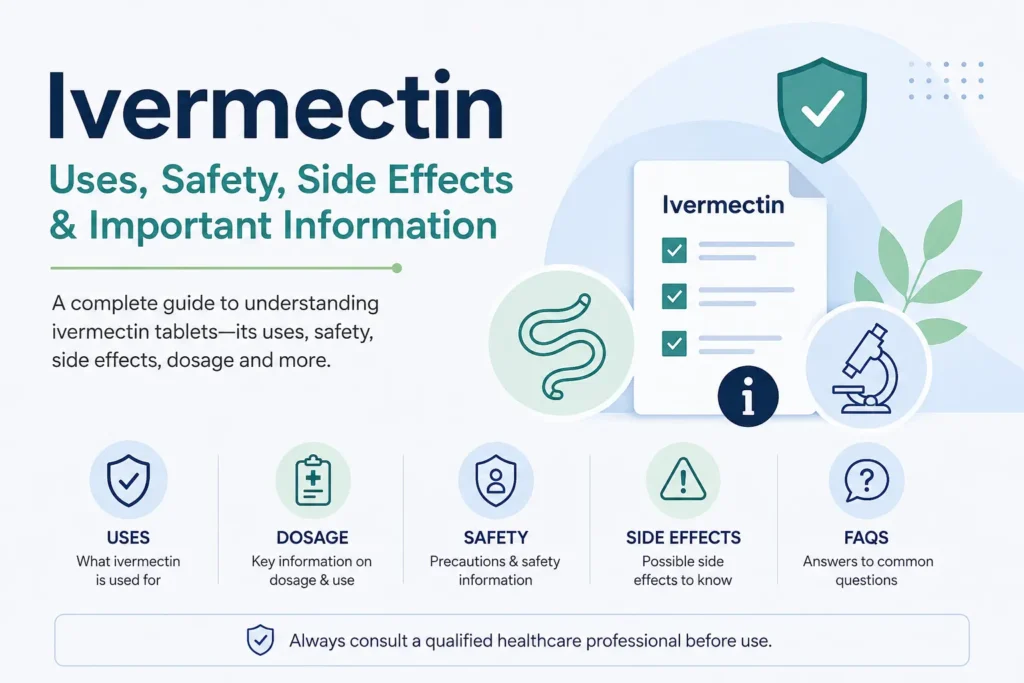
This guide explains what strongyloidiasis is, how ivermectin is used, symptoms, diagnosis, treatment considerations, safety and why follow-up can be important.
Medical disclaimer: This article is for general educational purposes only. It is not individualized medical advice, diagnosis or a treatment recommendation. Anyone with suspected strongyloidiasis should consult a qualified healthcare professional.
What Is Strongyloidiasis?
Strongyloidiasis is a parasitic infection caused primarily by Strongyloides stercoralis, a small roundworm that can live in the human intestine.
The infection occurs mainly in tropical and subtropical regions but can also occur in temperate countries. WHO estimates that hundreds of millions of people may be infected globally, although the true burden remains uncertain because strongyloidiasis is frequently underdiagnosed.
Unlike many other intestinal worms, Strongyloides can maintain itself within the human host through a process called autoinfection.
This means an untreated infection can potentially persist for many years.
How Is Strongyloidiasis Spread?
People usually acquire strongyloidiasis when infective larvae in contaminated soil come into contact with bare skin.
The larvae can penetrate the skin and eventually migrate through the body before reaching the intestine, where the adult worms live.
Risk can be higher in areas where:
- Sanitation is limited
- Human waste contaminates soil
- People frequently come into contact with soil
- Walking barefoot is common
- Warm, humid environmental conditions support transmission
Strongyloidiasis is therefore particularly associated with certain tropical and subtropical regions.
What Happens After Strongyloides Enters the Body?
The parasite has a complex life cycle.
After infective larvae penetrate the skin, they migrate through the body and eventually reach the intestine.
Adult female worms can produce larvae within the intestinal tract.
Some larvae leave the body in stool, while others can penetrate the intestinal wall or perianal skin and begin another cycle within the same person.
This process is known as autoinfection.
Because of autoinfection, untreated strongyloidiasis can persist for a very long time, potentially throughout a person’s life.
What Are the Symptoms of Strongyloidiasis?
Many people with strongyloidiasis have few or no symptoms.
When symptoms occur, they may include:
- Abdominal discomfort
- Diarrhea
- Nausea
- Loss of appetite
- Skin rash
- Itching
- Hives or urticaria
- Cough or respiratory symptoms during larval migration
WHO describes strongyloidiasis as ranging from subclinical infection to symptomatic disease involving gastrointestinal and skin manifestations.
Because symptoms can be mild or nonspecific, the infection may remain undiagnosed.
Can Strongyloidiasis Stay in the Body for Years?
Yes.
This is one of the most important characteristics of Strongyloides stercoralis infection.
The parasite’s autoinfective life cycle allows chronic infection to persist for years, sometimes without obvious symptoms.
Someone who acquired the infection many years earlier may therefore still have an active infection.
This is particularly important when a person later develops a condition requiring immunosuppressive treatment.
Ivermectin for Strongyloidiasis
Ivermectin is an established treatment for strongyloidiasis.
Current U.S. prescribing information indicates ivermectin tablets for the treatment of intestinal, nondisseminated strongyloidiasis caused by Strongyloides stercoralis.
WHO also identifies oral ivermectin as the standard treatment for chronic Strongyloides stercoralis infection.
The medicine works against the parasite and helps eliminate the infection.
However, treatment should be based on an appropriate diagnosis and medical assessment.
How Does Ivermectin Work Against Strongyloides?
Ivermectin acts on chloride channels in susceptible parasites, interfering with their nervous and muscular function.
This leads to paralysis and elimination of susceptible parasites.
The important point for patients is that ivermectin is specifically active against the parasitic stages relevant to treatment, but the clinical management of strongyloidiasis depends on the type and severity of infection.
For uncomplicated intestinal infection, oral ivermectin is an established treatment.
Severe or disseminated disease requires much more intensive medical management.
Ivermectin Dosage for Strongyloidiasis
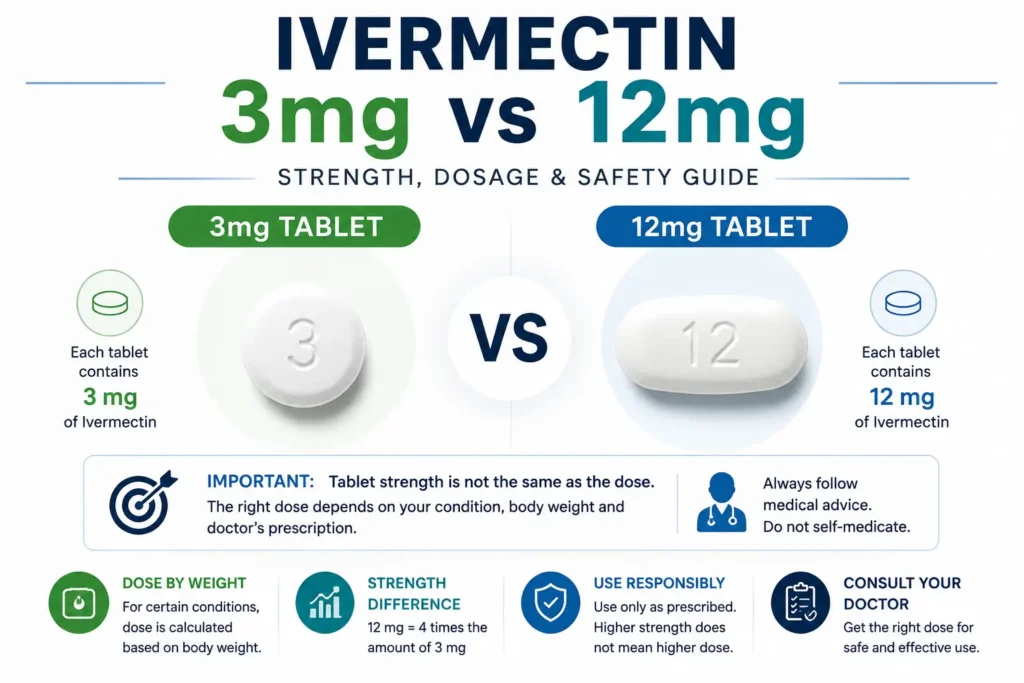
Ivermectin dosing is generally based on body weight.
Current U.S. prescribing information describes a single 200 microgram/kg oral dose for intestinal strongyloidiasis.
However, patients should not calculate or select their own ivermectin dose based solely on this information.
Treatment may need to be adapted depending on:
- Body weight
- Age
- Type of infection
- Immune status
- Other medical conditions
- Other medicines
- Diagnostic findings
- Local treatment guidelines
For a broader explanation of ivermectin dosing principles, see our Ivermectin Dosage Guide.
How Effective Is Ivermectin for Strongyloidiasis?
Clinical evidence supports ivermectin as an effective treatment for intestinal strongyloidiasis.
Current U.S. prescribing information reports that clinical studies found 64% to 100% of infected patients were cured following a single 200 microgram/kg dose.
However, these figures come from clinical studies and should not be interpreted as a guarantee of treatment success for an individual patient.
Follow-up may be necessary to determine whether the infection has been successfully cleared.
Why Is Follow-Up Important?
Strongyloidiasis can be difficult to diagnose and may persist without obvious symptoms.
CDC and other clinical guidance may recommend follow-up testing in certain circumstances, particularly when symptoms persist or when infection is difficult to confirm or eradicate.
A healthcare professional may use:
- Stool testing
- Specialized stool concentration or culture techniques
- Serology
- Molecular testing where available
WHO notes that conventional diagnostic methods can have limited sensitivity, contributing to underdiagnosis.
Therefore, feeling better does not always provide definitive proof that the infection has been eliminated.
Strongyloidiasis and Stool Testing
Stool examination is one of the methods used to investigate Strongyloides infection.
However, a single routine stool examination may not always detect the parasite.
The parasite may be present in relatively low numbers, and diagnostic sensitivity can vary depending on the technique used.
More specialized methods, including concentration techniques, culture and molecular testing, may improve detection. WHO specifically highlights the diagnostic challenges associated with strongyloidiasis.
The appropriate test should be selected by a healthcare professional.
Strongyloidiasis and Immunosuppression
This is perhaps the most important safety issue associated with chronic strongyloidiasis.
An otherwise mild or asymptomatic infection can become severe when a person’s immune system is suppressed.
This can occur with:
- Certain corticosteroid treatments
- Some cancer therapies
- Organ transplantation
- Certain immune-suppressing medicines
- Some underlying immune conditions
WHO highlights the risk of hyperinfection and disseminated disease in immunocompromised individuals.
What Is Strongyloides Hyperinfection?
Hyperinfection syndrome occurs when the parasite’s normal autoinfective cycle becomes greatly accelerated.
The number of larvae increases dramatically, and the infection can spread beyond the gastrointestinal tract.
The lungs are commonly involved.
Symptoms may include:
- Severe abdominal symptoms
- Diarrhea
- Respiratory problems
- Cough
- Fever
- Weakness
- Sepsis-like illness
Disseminated strongyloidiasis can affect multiple organs and is potentially fatal.
WHO reports a case-fatality rate exceeding 60% for disseminated disease.
This is why identifying and treating strongyloidiasis before immunosuppression can be extremely important.
Steroids and Strongyloidiasis
Corticosteroids can increase the risk of severe strongyloidiasis in people who already carry the parasite.
This is particularly important because corticosteroids are widely used to treat many medical conditions.
A person may have acquired Strongyloides years earlier and remain asymptomatic until immunosuppressive treatment accelerates the infection.
WHO has specifically highlighted the potentially devastating consequences of Strongyloides hyperinfection associated with corticosteroid use.
Therefore, people with epidemiological risk factors for strongyloidiasis may need evaluation before starting significant immunosuppressive therapy.
Who Should Be Concerned About Strongyloidiasis?
Risk assessment may be particularly relevant for people who:
- Have lived in endemic regions
- Have spent significant time in areas where strongyloidiasis is common
- Frequently had bare-skin contact with contaminated soil
- Have unexplained gastrointestinal symptoms
- Have recurrent unexplained rashes
- Are about to begin immunosuppressive treatment
- Have previously been diagnosed with strongyloidiasis
A healthcare professional can determine whether screening or testing is appropriate.
Ivermectin for Chronic Strongyloidiasis
Chronic strongyloidiasis can remain relatively mild or asymptomatic.
Nevertheless, treatment is important because the infection does not necessarily disappear on its own.
WHO describes untreated strongyloidiasis as potentially persisting for life because of the parasite’s autoinfective cycle.
Oral ivermectin is considered the standard treatment for chronic S. stercoralis infection.
Ivermectin for Severe Strongyloidiasis
Severe strongyloidiasis is not something to self-treat.
People with suspected hyperinfection or disseminated disease require urgent medical evaluation.
The treatment approach can differ substantially from uncomplicated intestinal infection and may involve prolonged or repeated antiparasitic therapy and management of complications.
The focus should be on urgent diagnosis and treatment under specialist medical supervision.
Can Strongyloidiasis Come Back?
Yes, but there are several possible explanations.
A person may:
- Have persistent infection
- Have inadequate treatment response
- Become reinfected through environmental exposure
- Have an undiagnosed infection that was never completely cleared
- Develop recurrence associated with immune suppression
Because strongyloidiasis has an unusual autoinfective life cycle, follow-up can be important in selected patients.
Ivermectin and Strongyloidiasis in Different Countries
The regulatory status of ivermectin can vary between countries.
In the United States, current labeling specifically includes intestinal, nondisseminated strongyloidiasis as an indication for ivermectin tablets.
WHO also recognizes ivermectin as the standard treatment for chronic Strongyloides stercoralis infection.
Public-health use may involve different considerations.
For example, WHO’s 2024 guideline recommends annual mass administration of single-dose ivermectin in certain endemic settings where S. stercoralis prevalence meets a specified threshold, beginning at age 5 years and above.
This public-health recommendation does not replace clinical diagnosis and treatment of individual patients. WHO explicitly states this distinction.
Strongyloidiasis vs Other Intestinal Worm Infections
Strongyloidiasis should not be confused with every other type of intestinal worm infection.
Different parasites require different diagnostic approaches and treatments.
For example:
- Strongyloides stercoralis → strongyloidiasis
- Ascaris lumbricoides → ascariasis
- Hookworms → hookworm infection
- Trichuris trichiura → trichuriasis
The appropriate medicine depends on the parasite involved.
This is why taking an antiparasitic medicine without knowing which infection is present may not provide the expected result.
Can You Have Strongyloidiasis Without Symptoms?
Yes.
Many infections are asymptomatic or produce only mild, nonspecific symptoms.
WHO specifically notes that strongyloidiasis is frequently underdiagnosed because many infections are asymptomatic and diagnostic methods can have limited sensitivity.
This is one reason strongyloidiasis can remain undetected for years.
Is Strongyloidiasis Contagious Between People?
Direct person-to-person transmission is not the usual route of infection.
The primary transmission mechanism involves infective larvae in contaminated soil penetrating human skin.
However, unusual transmission routes can occur in specific circumstances.
The main prevention strategy is therefore focused on:
- Sanitation
- Safe disposal of human waste
- Avoiding direct contact with contaminated soil
- Wearing appropriate footwear
How Can Strongyloidiasis Be Prevented?
Prevention is closely linked to sanitation and reducing contact between skin and contaminated soil.
Helpful measures include:
- Wearing shoes outdoors
- Avoiding walking barefoot in areas where soil contamination may occur
- Improving sanitation
- Proper disposal of human waste
- Maintaining good hygiene
WHO identifies improved sanitation and human waste disposal as important factors in reducing strongyloidiasis.
Ivermectin Safety in Strongyloidiasis
Ivermectin is generally well tolerated when used appropriately, but adverse effects and contraindications still need to be considered.
Possible adverse effects can include:
- Dizziness
- Nausea
- Diarrhea
- Fatigue
- Skin reactions
- Headache
Some reactions may also reflect the body’s response to dying parasites rather than a direct toxic effect of the medicine.
For broader information, see our Ivermectin Side Effects & Safety Guide.
Ivermectin and Drug Interactions
People taking other medicines should tell their healthcare professional before using ivermectin.
This is particularly important for people taking multiple medications or those with significant medical conditions.
For more information, see our Ivermectin Drug Interactions Guide.
Ivermectin for Strongyloidiasis During Pregnancy
Pregnancy requires special consideration.
The decision to use ivermectin during pregnancy should be made by a qualified healthcare professional after considering the potential benefits and risks.
Do not self-treat suspected strongyloidiasis during pregnancy.
This is particularly important because untreated strongyloidiasis can also present serious risks in specific circumstances.
Ivermectin for Strongyloidiasis in Children
Children require individualized assessment.
Age, body weight, the type of infection and local treatment recommendations all matter.
WHO’s 2024 public-health recommendation for mass drug administration in endemic settings begins at 5 years of age and above, but this is a public-health intervention and should not be interpreted as a universal clinical treatment rule for every child.
Parents should not calculate an ivermectin dose for a child without professional guidance.
Can Ivermectin Treat Strongyloidiasis and Other Parasites?
Ivermectin has activity against several parasites, but that does not mean the same treatment regimen applies to every infection.
For example, current U.S. labeling separately identifies strongyloidiasis and onchocerciasis as indications for ivermectin tablets, with different clinical considerations.
This is why the underlying diagnosis matters.
Why Diagnosis Matters Before Taking Ivermectin
Symptoms such as:
- Abdominal discomfort
- Diarrhea
- Rash
- Itching
- Cough
can have many causes.
They do not automatically indicate strongyloidiasis.
A healthcare professional may consider travel history, country of residence, soil exposure, symptoms, immune status and diagnostic testing before determining whether treatment is appropriate.
When Should You Seek Medical Attention?
Seek medical evaluation if you have:
- Persistent unexplained gastrointestinal symptoms
- A history of living in or travelling to an endemic region
- Known exposure to contaminated soil
- A previous diagnosis of strongyloidiasis
- A planned course of significant immunosuppressive treatment
- Symptoms suggesting severe infection
- Unexplained respiratory symptoms together with gastrointestinal or parasitic symptoms
Urgent medical attention is particularly important when severe symptoms develop in someone known or suspected to have strongyloidiasis.
Ivermectin for Strongyloidiasis: Key Takeaways
| Question | Key point |
|---|---|
| What causes strongyloidiasis? | Primarily Strongyloides stercoralis. |
| How is it acquired? | Usually through skin contact with contaminated soil. |
| Can it be asymptomatic? | Yes. |
| Can infection persist for years? | Yes, because of autoinfection. |
| Is ivermectin used for strongyloidiasis? | Yes. |
| Is oral ivermectin an established treatment? | Yes, for intestinal/nondisseminated strongyloidiasis. |
| Can strongyloidiasis become serious? | Yes, particularly with immunosuppression. |
| What is hyperinfection? | A severe acceleration of the parasite’s autoinfective cycle. |
| Can steroids increase the risk? | Yes, immunosuppression can precipitate severe disease. |
| Is diagnosis important? | Yes, because symptoms can be mild and nonspecific. |
| Is follow-up sometimes necessary? | Yes, depending on the clinical situation. |
| Can treatment be self-selected? | No. Medical assessment is recommended. |
Frequently Asked Questions About Ivermectin for Strongyloidiasis
What is ivermectin used for in strongyloidiasis?
Ivermectin is an established treatment for intestinal strongyloidiasis caused by Strongyloides stercoralis. Current U.S. labeling specifically identifies intestinal, nondisseminated strongyloidiasis as an indication.
What parasite causes strongyloidiasis?
Strongyloidiasis is primarily caused by the nematode Strongyloides stercoralis.
Can strongyloidiasis last for years?
Yes. The parasite can maintain infection through autoinfection, allowing untreated infection to persist for many years.
Can you have strongyloidiasis without symptoms?
Yes. Many infections produce few or no symptoms, which contributes to underdiagnosis.
What is the standard treatment for strongyloidiasis?
WHO identifies oral ivermectin as the standard treatment for chronic Strongyloides stercoralis infection.
What is the usual ivermectin dose for strongyloidiasis?
Current U.S. prescribing information describes a single 200 microgram/kg oral dose for intestinal strongyloidiasis. However, treatment should be determined by a healthcare professional rather than self-calculated.
Can strongyloidiasis become life-threatening?
Yes. Hyperinfection and disseminated strongyloidiasis can be severe and potentially fatal, particularly in immunocompromised individuals.
Can steroids make strongyloidiasis worse?
Immunosuppressive corticosteroid treatment can precipitate severe Strongyloides hyperinfection in people with underlying infection.
How is strongyloidiasis diagnosed?
Diagnosis may involve stool testing, specialized laboratory techniques, serology or molecular testing, depending on availability and clinical circumstances. WHO notes that diagnosis can be challenging.
Can strongyloidiasis come back after treatment?
Persistent infection, reinfection or recurrence associated with immune suppression can occur. Follow-up may therefore be appropriate in selected patients.
Is ivermectin the same treatment for every parasitic infection?
No. Different parasites require different diagnostic and treatment approaches.
Can ivermectin be used for strongyloidiasis in children?
Treatment decisions depend on age, weight, clinical circumstances and applicable guidelines. Children should not be given ivermectin without appropriate medical guidance.
Is strongyloidiasis contagious?
The usual route is environmental exposure to infective larvae in contaminated soil rather than ordinary person-to-person contact.
Final Takeaway
Ivermectin is an established treatment for intestinal strongyloidiasis caused by Strongyloides stercoralis.
The infection is unusual because it can persist for years through autoinfection, sometimes with few or no symptoms. This becomes particularly important when a person is exposed to immunosuppressive treatment, because chronic infection can progress to severe hyperinfection or disseminated disease.
The key points are:
Strongyloides infection → appropriate diagnosis → appropriate ivermectin treatment → follow-up when indicated.
Anyone with suspected strongyloidiasis, particularly someone who has lived in an endemic area and is about to receive immunosuppressive treatment, should discuss the situation with a qualified healthcare professional.
Related Ivermectin Guides
Ivermectin Uses: Medical Uses & Indications
Ivermectin Side Effects & Safety Guide
Ivermectin Drug Interactions Guide
Medical Disclaimer
This article is provided for general educational and informational purposes only. It is not intended to diagnose, treat, cure or prevent any disease and should not replace advice from a qualified healthcare professional.
Ivermectin products differ in formulation, strength, indication, regulatory status and treatment instructions. Always consult an appropriately qualified healthcare professional and follow the official product information applicable to your country.
Authoritative References
DailyMed — Ivermectin Tablets
DailyMed: Ivermectin Tablets
WHO — Strongyloidiasis
WHO: Strongyloidiasis
WHO — Guideline on Preventive Chemotherapy for Strongyloidiasis
WHO: Strongyloidiasis Guideline
WHO — Strongyloidiasis and Hyperinfection
WHO: Strongyloidiasis and Corticosteroids