
Table of Contents
Ivermectin for head lice is available as a topical lotion used to treat head-lice infestations.
In the United States, ivermectin lotion 0.5% is FDA-approved for the topical treatment of head lice in people 6 months of age and older. The FDA approved the product for nonprescription use in 2020.
It is important to distinguish this topical lotion from oral ivermectin tablets. They are different formulations intended for different routes of administration and should not be treated as interchangeable.
This guide explains how ivermectin lotion is used for head lice, how it differs from other lice treatments, important precautions, and what to know about reinfestation.
Medical disclaimer: This article is for general educational purposes only. It is not individualized medical advice. Always follow the instructions on the specific product label and consult a qualified healthcare professional when appropriate.
What Are Head Lice?
Head lice are small parasitic insects that live primarily on the human scalp and feed on blood.
The infestation is called pediculosis capitis.
Head lice are commonly spread through direct head-to-head contact. They do not live on pets, and household pets do not spread human head lice.
Common symptoms can include:
- Scalp itching
- A crawling or tickling sensation
- Irritation from scratching
- Visible crawling lice
- Nits attached to individual hairs
However, itching alone does not prove that someone has head lice. Correct identification of live lice is important before starting treatment.
Is Ivermectin Used for Head Lice?
Yes.
Ivermectin lotion 0.5% is an established treatment for head-lice infestation.
The FDA originally approved ivermectin lotion 0.5% in 2012 as a prescription treatment and subsequently approved its switch to nonprescription use in 2020. It is indicated for patients 6 months of age and older.
The CDC also lists ivermectin lotion 0.5% among the medications used to treat head lice.
How Does Ivermectin Lotion Work Against Head Lice?
Ivermectin affects the nervous system of susceptible lice.
The topical lotion is designed to kill live head lice following application to the scalp and hair.
According to CDC guidance, ivermectin lotion kills lice and, although it does not kill eggs, appears to prevent newly hatched nymphs from surviving.
This is different from some other lice treatments that kill live lice but have little or no activity against unhatched eggs.
Ivermectin Lotion vs Ivermectin Tablets
This is one of the most important distinctions in this article.
Ivermectin lotion
- Contains ivermectin as the active ingredient
- Applied directly to the hair and scalp
- Specifically formulated for topical use
- Ivermectin 0.5% lotion is approved for head lice in the U.S.
- Intended for patients 6 months and older
Oral ivermectin tablets
- Taken by mouth
- Used for different medical indications
- Have different dosing considerations
- Are not the same formulation as ivermectin lotion
The FDA-approved ivermectin lotion is specifically labeled for external use on the scalp and should not be taken orally.
Do not substitute ivermectin tablets for lice lotion or apply oral tablets to the scalp.
How Is Ivermectin Lotion Used for Head Lice?
The specific instructions on the product label should always be followed.
Current U.S. ivermectin 0.5% lotion labeling describes topical use on the scalp and dry hair. The original FDA-approved product was applied thoroughly to the hair and scalp, left for approximately 10 minutes, and then rinsed with water.
Some current OTC ivermectin 0.5% labels similarly specify a single application and external use only.
Important:
Do not assume that every ivermectin product has identical instructions.
Always follow the Drug Facts label of the specific product being used.
Does Ivermectin Lotion Need Nit Combing?
One of the interesting differences between ivermectin lotion and some other lice treatments is that CDC guidance states that ivermectin lotion can be effective after a single application without nit combing.
However, a fine-tooth or nit comb can still be useful for physically removing lice and nits from the hair.
Whether combing is necessary depends on the specific product instructions and the treatment approach being followed.
Does Ivermectin Kill Lice Eggs?
Ivermectin lotion does not directly kill all unhatched eggs.
However, CDC guidance states that it appears to prevent newly hatched lice from surviving.
This distinction is important.
It also explains why different lice medicines can have different instructions regarding retreatment.
Is a Second Ivermectin Lotion Treatment Necessary?
For the FDA-approved ivermectin 0.5% lotion, a second application is generally not recommended simply as routine retreatment.
CDC guidance specifically states that ivermectin lotion is effective for most patients as a single application and that it should not be used for retreatment without talking to a healthcare provider.
If live crawling lice remain after treatment, don’t automatically apply another dose.
Instead, check the product instructions and speak with a healthcare professional.
How Long Does It Take Ivermectin Lotion to Work?
Ivermectin lotion is designed to kill head lice following treatment.
However, seeing a small number of slowly moving lice shortly after treatment does not necessarily mean the treatment has failed.
CDC guidance advises that if lice are moving slowly 8–12 hours after treatment, there is generally no need to immediately reapply the medication. A fine comb can be used to remove dead or remaining lice.
If the lice appear as active as they were before treatment, consult a healthcare professional before retreating.
Who Can Use Ivermectin Lotion?
In the United States, ivermectin 0.5% lotion is approved for people 6 months of age and older.
Children younger than 6 months should not be treated with this product unless a healthcare professional provides an appropriate alternative.
Young children should also be supervised during treatment to help prevent accidental ingestion.
Ivermectin for Head Lice in Children
Head lice are common among children, but treatment should still be selected carefully.
The FDA-approved ivermectin 0.5% lotion is indicated for children 6 months and older in the United States.
The CDC advises consulting a healthcare provider before treating young children.
Important:
Never assume that the dose or formulation used for an adult is appropriate for a child.
And never use ivermectin tablets as a substitute for topical lice treatment in a child without medical guidance.
Ivermectin for Head Lice During Pregnancy
If you are pregnant or planning to become pregnant, consult your healthcare professional before using an ivermectin lice product.
Current OTC ivermectin lotion labeling advises consumers who are pregnant or planning to become pregnant to ask a doctor before use.
Pregnancy-related treatment decisions should be individualized.
Ivermectin Lotion and Breastfeeding
People who are breastfeeding should also check the product label and discuss treatment with a healthcare professional.
Current ivermectin lotion labeling advises breastfeeding individuals to ask a doctor before use and to avoid getting the product on the breast to help prevent contact between the product and the baby.
Ivermectin Lotion Safety
Ivermectin lotion is designed for external use only.
Current labeling states that it should be used only on the scalp and should not be used:
- Near the eyes
- Inside the nose
- Inside the ears
- Inside the mouth
- Inside the vagina
- On the eyebrows or eyelashes
If lice are present in the eyelashes or eyebrows, seek medical advice rather than applying scalp lice medication to those areas.
Can Ivermectin Lotion Be Used on Wet Hair?
The FDA-approved ivermectin lotion directions specify application to dry hair and scalp.
Therefore, don’t wet the hair first unless the specific product instructions say otherwise.
Always follow the current label of the product you are using.
Ivermectin for Head Lice vs Permethrin
Ivermectin lotion is one of several treatments available for head lice.
The CDC lists both ivermectin lotion and permethrin lotion among treatment options.
However, their properties differ.
| Feature | Ivermectin lotion 0.5% | Permethrin lotion 1% |
|---|---|---|
| Route | Topical | Topical |
| Used for | Head lice | Head lice |
| FDA-approved age | 6 months+ | 2 months+ |
| Effect on eggs | Does not kill eggs directly | Does not kill unhatched eggs |
| Retreatment | Follow product/medical guidance | Often around day 9 when required |
| Resistance considerations | Different mechanism | Resistance has been reported |
CDC guidance notes that resistance to permethrin exists, although its prevalence is not well established.
The appropriate treatment depends on the individual situation.
What If Ivermectin Does Not Work?
Treatment failure does not always mean that the medicine itself has failed.
CDC identifies several possible reasons for unsuccessful head-lice treatment, including:
- Misdiagnosis
- Incorrect application
- Not following instructions
- Resistance
- Reinfestation
- Recent use of conditioner before treatment
If live lice remain after treatment, don’t repeatedly apply medication without guidance.
A healthcare professional can determine whether another treatment or a different approach is appropriate.
Treating Other Household Members
Head lice can spread through close contact.
The CDC recommends checking household members and close contacts for head lice and treating people who are infested. People who share a bed with an infested person should also be considered.
This is important because treating one person while another household member remains infested can lead to reinfestation.
Does the Entire House Need to Be Disinfected?
Usually, no.
Head lice do not survive for long away from the human scalp.
The CDC recommends washing and drying clothing, bedding and other items used by the infested person during the two days before treatment. Items that cannot be washed or dry-cleaned can be sealed in a plastic bag for two weeks.
Combs and brushes can be soaked in hot water of at least 130°F (54°C) for 5–10 minutes.
There is generally no need to fumigate the home.
The CDC specifically warns against using fumigant sprays or fogs because they can be toxic.
Can Pets Spread Head Lice?
No.
Human head lice live on humans and do not infest household pets.
The CDC specifically states that animals do not get or spread human head lice.
Therefore, treating pets for head lice is unnecessary.
Ivermectin for Head Lice vs Scabies
Ivermectin is used in different formulations and treatment approaches for different conditions.
For head lice, ivermectin 0.5% lotion is a topical treatment specifically formulated for the scalp.
For scabies, oral ivermectin may be used in appropriate clinical circumstances, while topical treatments such as permethrin are also used.
These are different infestations requiring different treatment approaches.
For more information, see our Ivermectin for Scabies: Uses, Treatment & Important Information.
Can I Use Ivermectin Tablets for Head Lice?
This requires particular caution.
The CDC notes that oral ivermectin tablets can be effective against head lice, but they are not FDA-approved for treatment of lice. CDC also states that oral ivermectin should not be used in children weighing less than 15 kg or in pregnant women.
This is very different from the FDA-approved topical ivermectin 0.5% lotion.
Therefore, oral ivermectin should not be self-selected as an alternative to topical lice treatment.
A healthcare professional should determine whether oral therapy is appropriate.
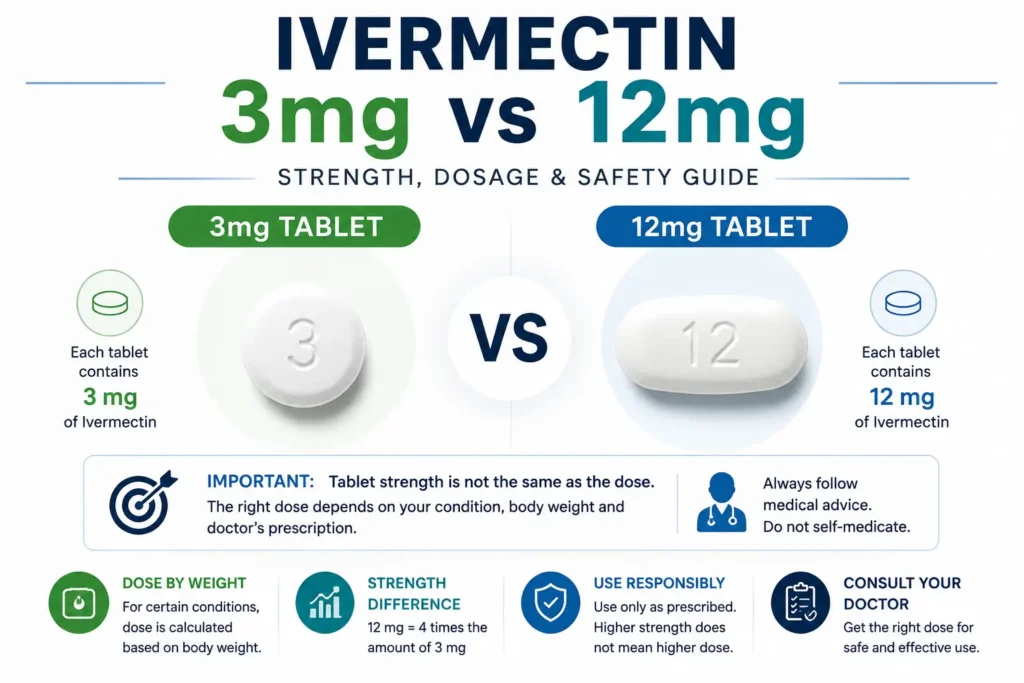
Why You Should Not Use Ivermectin 12mg Tablets for Head Lice on Your Own
This is particularly relevant for people searching online for “ivermectin 12 mg for lice.”
An ivermectin tablet and ivermectin 0.5% lotion are different formulations.
The FDA-approved lotion is designed specifically for topical treatment of head lice, while oral ivermectin tablets have different indications and dosing considerations.
Therefore:
Do not assume that a 12 mg ivermectin tablet is an alternative to ivermectin lice lotion.
This is exactly why tablet strength should not be confused with the appropriate medical treatment.
Common Mistakes When Treating Head Lice
1. Treating without confirming lice
An itchy scalp does not necessarily mean head lice.
2. Using the wrong formulation
Oral tablets and topical lotion are not interchangeable.
3. Applying the product incorrectly
Follow the product’s exact directions.
4. Reapplying too quickly
Do not automatically repeat ivermectin lotion if you still see lice shortly after treatment.
5. Ignoring household contacts
Untreated infested contacts can contribute to reinfestation.
6. Using veterinary ivermectin
Veterinary medicines are not substitutes for human medicines.
7. Using household pesticides
Fumigant sprays and fogs are unnecessary and can be harmful.
When Should You See a Healthcare Professional?
Seek professional advice if:
- You are unsure whether the person has head lice
- The patient is younger than 6 months
- The patient is pregnant or breastfeeding
- Lice are present around the eyes or eyelashes
- Treatment appears unsuccessful
- Live lice remain after following the product instructions
- The scalp has significant irritation or infection
- You are unsure which treatment is appropriate
If the infestation is repeatedly returning, the cause may be reinfestation, incorrect treatment, resistance or an incorrect diagnosis.
Frequently Asked Questions About Ivermectin for Head Lice
Is ivermectin effective for head lice?
Yes. Ivermectin lotion 0.5% is an established topical treatment for head lice, and the FDA has approved it for patients 6 months and older.
What ivermectin is used for head lice?
The topical ivermectin 0.5% lotion formulation is specifically used for head lice. It should not be confused with oral ivermectin tablets.
Is ivermectin lotion available without a prescription?
In the United States, the FDA approved ivermectin 0.5% lotion for nonprescription use in 2020.
Availability and regulatory status can differ by country.
Does ivermectin lotion kill lice eggs?
It does not directly kill unhatched eggs, but CDC notes that it appears to prevent newly hatched nymphs from surviving.
Does ivermectin lotion require a second treatment?
Routine retreatment should not be done without appropriate guidance. CDC specifically advises talking to a healthcare provider before retreating with ivermectin lotion.
Can children use ivermectin lotion?
In the United States, ivermectin 0.5% lotion is approved for patients 6 months and older.
Can babies under 6 months use ivermectin lotion?
No. Current labeling says not to use ivermectin 0.5% lotion on children under 6 months.
Can ivermectin tablets be used for head lice?
CDC notes that oral ivermectin tablets can be effective against head lice, but they are not FDA-approved for this indication and require specific medical considerations.
Can I use ivermectin 12mg tablets instead of lice lotion?
Do not make this substitution yourself. Oral ivermectin and topical ivermectin lotion are different formulations with different indications and directions.
Can pets spread head lice?
No. Human head lice do not infest household pets.
Do I need to fumigate my house for head lice?
No. The CDC advises against fumigant sprays and fogs because they can be toxic.
Can itching continue after treatment?
Yes. Scalp irritation or itching can continue for some time after treatment. If live lice remain or symptoms worsen, consult a healthcare professional.
Key Takeaway
Ivermectin for head lice is primarily relevant as a topical 0.5% lotion specifically formulated for scalp treatment.
In the United States, the FDA-approved ivermectin lotion is indicated for people 6 months of age and older, and CDC guidance recognizes it as an effective treatment option.
The most important things to remember are:
- Confirm that the infestation is actually head lice.
- Use the correct formulation.
- Follow the product label carefully.
- Do not substitute ivermectin tablets for topical lice lotion without medical advice.
- Do not automatically repeat treatment.
- Check household members and close contacts.
- Wash or isolate recently used clothing and bedding appropriately.
- Do not use fumigant sprays.
- Seek professional advice for young children, pregnancy, breastfeeding or treatment failure.
Related Ivermectin Guides
Ivermectin Uses: Approved Medical Uses & Indications
Ivermectin for Scabies: Uses, Treatment & Important Information
Ivermectin Side Effects & Safety Guide
Ivermectin Drug Interactions Guide
Medical Disclaimer
This article is provided for general educational and informational purposes only. It is not intended to diagnose, treat, cure or prevent any disease or to replace advice from a qualified healthcare professional. Ivermectin products differ in formulation, strength, route of administration, indication and regulatory status. Always follow the official product labeling applicable to your country and consult a qualified healthcare professional when appropriate.
Authoritative References
FDA — Ivermectin Lotion for Head Lice
FDA: Ivermectin Lotion for Head Lice
CDC — Clinical Care of Head Lice
CDC: Clinical Care of Head Lice
CDC — Treatment of Head Lice
CDC: Treatment of Head Lice
DailyMed — Ivermectin 0.5% Lotion
DailyMed: Ivermectin Lotion Label