
Table of Contents
Ivermectin is an antiparasitic medicine used for certain parasitic infections and, depending on the formulation and country, some topical ivermectin products have other approved uses.
Like any medicine, ivermectin can cause side effects or adverse reactions. The type and likelihood of a reaction can depend on the formulation, medical condition being treated, dose, patient characteristics and other medicines being taken.
This guide explains common ivermectin side effects, potentially serious reactions, safety precautions, overdose concerns and when medical advice may be appropriate.
Important: This article is for general educational purposes only. It does not provide personalized medical advice, diagnosis or treatment recommendations. Always follow the instructions provided by a qualified healthcare professional and the approved product information applicable to your country.
For a broader overview of ivermectin, including its uses and general safety information, read our Ivermectin educational guide.
What Are the Common Side Effects of Ivermectin?
Many people tolerate ivermectin without serious problems, but side effects can occur.
For oral ivermectin, commonly reported reactions in official prescribing information include:
- Dizziness
- Nausea
- Vomiting
- Diarrhea
- Constipation
- Abdominal pain or discomfort
- Loss of appetite
- Weakness or fatigue
- Tremor
- Drowsiness
- Rash
- Itching
Current DailyMed Ivermectin Tablets prescribing information reports gastrointestinal symptoms, dizziness, fatigue, rash, itching and other reactions in clinical studies.
MedlinePlus Ivermectin Drug Information also lists dizziness, loss of appetite, nausea, vomiting, stomach pain or bloating, diarrhea, constipation, weakness, uncontrollable shaking and chest discomfort among possible side effects of oral ivermectin.
Important
Not every symptom experienced while taking ivermectin is necessarily caused by the medicine.
The underlying infection, another medicine or another health condition may also contribute to symptoms.
If you experience an unusual or persistent reaction, discuss it with your doctor or pharmacist.
Ivermectin Side Effects by Body System
Understanding possible reactions by category can make the information easier to follow.
Digestive System
Possible gastrointestinal effects include:
- Nausea
- Vomiting
- Diarrhea
- Constipation
- Abdominal pain
- Abdominal discomfort or bloating
- Reduced appetite
These reactions have been reported in clinical studies of oral ivermectin. (DailyMed)
Nervous System
Some people may experience:
- Dizziness
- Drowsiness
- Tremor
- Vertigo
- Weakness
More serious neurological effects have also been reported, particularly in the context of excessive exposure or certain clinical circumstances. (DailyMed)
Skin
Skin-related reactions can include:
- Rash
- Itching
- Hives
Rare but serious skin reactions have also been reported in post-marketing experience. (DailyMed)
Cardiovascular Effects
Some official clinical data have reported reactions such as:
- Low blood pressure when standing
- Increased heart rate
- Peripheral swelling
These are not necessarily common reactions in every patient and should be interpreted in the context of the underlying condition and treatment. (DailyMed)
What Are the Serious Side Effects of Ivermectin?
Most side effects are not necessarily serious, but some reactions require prompt medical attention.
MedlinePlus advises patients to contact their doctor immediately if they experience symptoms such as:
- Blistering or peeling skin
- Severe rash
- Hives
- Severe itching
- Significant drowsiness
- Confusion
- Disorientation
- Loss of consciousness
(MedlinePlus – Ivermectin Drug Information)
Current DailyMed labeling also includes rare post-marketing reports of serious reactions such as:
- Stevens-Johnson syndrome
- Toxic epidermal necrolysis
- Seizures
- Hepatitis
- Increased liver enzymes
- Increased bilirubin
- Severe changes in consciousness
(DailyMed)
These reactions are not typical everyday side effects, but they are important to recognize because of their potential seriousness.
Can Ivermectin Cause Dizziness or Weakness?
Yes.
Dizziness and weakness are among the possible adverse effects reported with oral ivermectin. Drowsiness, vertigo and tremor have also been reported. (DailyMed)
If dizziness is significant, it may be sensible to avoid activities where impaired balance or alertness could create a safety risk.
Persistent or severe dizziness should be discussed with a healthcare professional.
Can Ivermectin Cause Nausea or Stomach Problems?
Yes.
Nausea, vomiting, diarrhea, constipation and abdominal discomfort have been reported with oral ivermectin. (DailyMed)
If gastrointestinal symptoms are severe, persistent or accompanied by other concerning symptoms, seek appropriate medical advice.
Do not automatically assume that increasing or reducing the ivermectin dose will solve the problem.
Can Ivermectin Cause a Rash or Itching?
Yes.
Rash, itching and hives are among the skin reactions reported with ivermectin. (MedlinePlus)
A mild reaction should still be discussed with a healthcare professional if it persists or worsens.
However, blistering, peeling skin, extensive rash, hives accompanied by other symptoms or signs of a severe allergic reaction require prompt medical attention. (MedlinePlus)
Can Ivermectin Cause Serious Neurological Effects?
Serious neurological reactions are uncommon but have been reported.
Official labeling includes post-marketing reports of:
- Confusion
- Disorientation
- Altered consciousness
- Severe drowsiness
- Stupor
- Coma
- Seizures
(DailyMed)
The FDA also warns that excessive ivermectin exposure can cause neurological effects such as problems with balance, seizures and coma. (FDA – Ivermectin and COVID-19)
This is one reason it is important not to take more ivermectin than directed.
Ivermectin Side Effects and Dosage
Side effects should not be considered separately from dosage.
For certain approved oral uses, ivermectin dosing is based on factors such as the medical condition and body weight.
For a detailed explanation of how ivermectin dosage can relate to body weight and medical indication, see our Ivermectin Dosage Guide.
The important principle is:
Do not increase or decrease ivermectin dosage simply because you experience symptoms or because a higher dose appears to work faster.
Dosage should follow the applicable prescribing information and qualified medical advice.
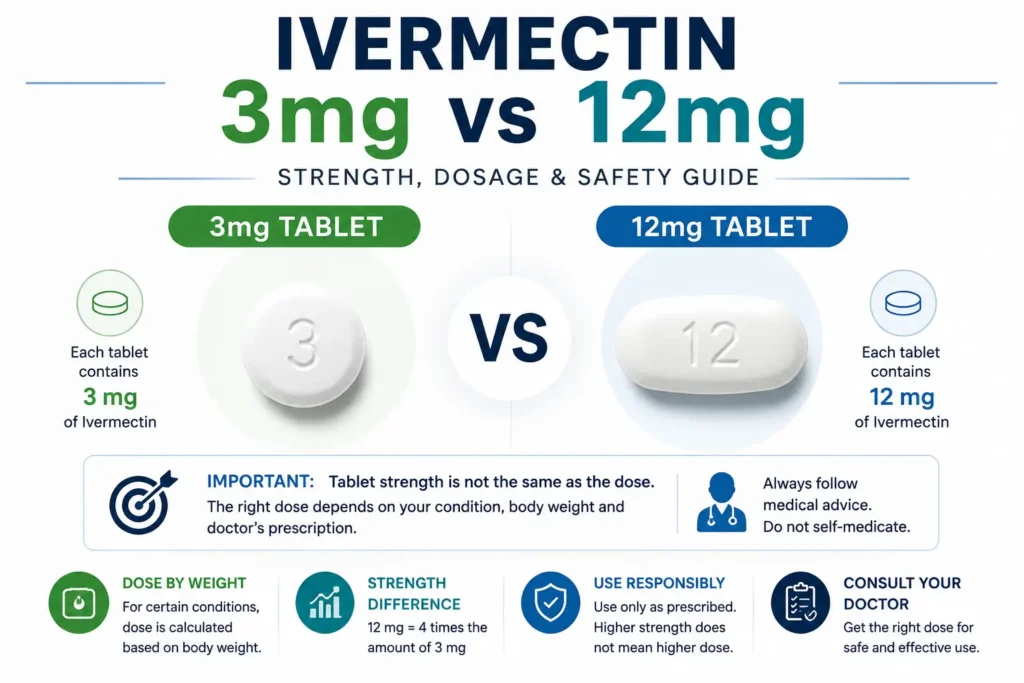
Ivermectin 3mg vs 12mg and Side Effects
Another common question is whether a 12 mg ivermectin tablet causes more side effects than a 3 mg tablet.
The answer is not simply based on the number printed on the tablet.
Tablet strength describes the amount of active ingredient in one tablet. The overall exposure depends on factors including the dose taken, the medical indication, body weight, formulation and individual patient characteristics.
For more information about tablet strength, read our Ivermectin 3mg vs 12mg: Key Differences, Strength & Safety Guide.
The important point is that a higher-strength tablet should not be selected simply because it is more convenient or contains more ivermectin.
Who Should Take Extra Precautions With Ivermectin?
Before taking ivermectin, patients should tell their healthcare professional about:
- Other prescription medicines
- Non-prescription medicines
- Vitamins
- Nutritional supplements
- Herbal products
- Existing medical conditions
- Previous medicine allergies
MedlinePlus specifically advises patients to tell their doctor and pharmacist about other medicines, vitamins, supplements and herbal products they are taking or planning to take.
This information can help healthcare professionals identify potential interactions or other safety considerations.
Ivermectin and Drug Interactions
Ivermectin may interact with other medicines.
The FDA specifically notes that ivermectin can interact with certain medicines, including some blood-thinning medications. (FDA – Ivermectin and COVID-19)
This does not mean that everyone taking another medicine will experience an interaction.
Instead, it highlights why healthcare professionals should know what medicines and supplements a patient is already taking.
Before taking ivermectin
Prepare a list of:
- Prescription medicines
- Over-the-counter medicines
- Vitamins
- Supplements
- Herbal products
Share this information with your doctor or pharmacist.
What Happens If You Take Too Much Ivermectin?
Taking more ivermectin than recommended can be dangerous.
The FDA’s ivermectin safety information warns that excessive ivermectin exposure can cause symptoms including:
- Nausea
- Vomiting
- Diarrhea
- Low blood pressure
- Dizziness
- Problems with balance or coordination
- Seizures
- Coma
- Potentially death
The risk is particularly concerning when people use ivermectin outside the approved instructions or take products intended for animals.
If an overdose is suspected, seek appropriate medical assistance rather than trying to correct the situation by taking additional medicines.
Never Use Veterinary Ivermectin for Human Treatment
This deserves a clear warning.
Veterinary ivermectin products can be formulated differently from medicines intended for humans.
The FDA’s ivermectin safety guidance specifically warns that animal ivermectin products are different formulations from those approved for humans and should not be used by people.
Therefore:
Do not substitute veterinary ivermectin products for medicines intended for human use.
Always use a product that is appropriately manufactured, labeled and authorized for its intended human use in the relevant market.
Ivermectin Side Effects During Treatment of Onchocerciasis
There is an additional consideration when ivermectin is used for onchocerciasis.
Some reactions can be related to the underlying disease and its treatment rather than representing a simple drug side effect.
MedlinePlus lists possible reactions including:
- Swelling around the eyes
- Swelling of the face, hands, feet or lower legs
- Joint pain and swelling
- Swollen glands
- Rapid heartbeat
- Eye pain
- Eye redness or tearing
- Fever
Current prescribing information also discusses ocular reactions associated with onchocerciasis and its treatment. (DailyMed)
This is another reason why treatment should be guided by an appropriately qualified healthcare professional.
How Long Do Ivermectin Side Effects Last?
There is no single answer.
The duration of a reaction can depend on:
- The type of side effect
- The dose
- The medical indication
- The patient’s individual response
- Other medicines
- The underlying disease
Some mild reactions may resolve without treatment, while persistent, worsening or serious symptoms require medical evaluation.
If a side effect does not improve or becomes severe, contact your healthcare professional.
Common Mistakes to Avoid With Ivermectin
1. Taking more because the symptoms are not improving
Lack of improvement does not automatically mean that a higher dose is needed.
2. Using someone else’s ivermectin
A medicine prescribed for another person may not be appropriate for you.
3. Combining ivermectin with other medicines without checking
Always tell your doctor or pharmacist about other medicines and supplements.
4. Using veterinary ivermectin
Human and veterinary formulations are not automatically interchangeable.
5. Following social-media dosage recommendations
Online posts may omit important safety information.
6. Assuming every reaction is caused by ivermectin
Symptoms can also result from the underlying illness or another medicine.
When Should You Contact a Healthcare Professional?
You should seek medical advice if:
- Side effects are persistent or worsening
- You develop a significant rash
- You experience severe dizziness
- You develop unusual confusion or drowsiness
- You experience difficulty maintaining balance
- You have concerning eye symptoms
- You believe you have taken too much ivermectin
- You accidentally used a veterinary ivermectin product
- You are taking other medicines and are concerned about interactions
Severe symptoms such as loss of consciousness, seizures, serious skin reactions or other emergency symptoms require urgent medical attention.
Frequently Asked Questions About Ivermectin Side Effects
What are the most common side effects of ivermectin?
Possible side effects include dizziness, nausea, vomiting, diarrhea, constipation, abdominal discomfort, weakness, drowsiness, tremor, rash and itching. (MedlinePlus)
Can ivermectin cause dizziness?
Yes. Dizziness is one of the adverse reactions reported with oral ivermectin. (DailyMed)
Can ivermectin cause nausea and diarrhea?
Yes. Rash, itching and hives can occur. Severe skin reactions are uncommon but require prompt medical attention. (MedlinePlus)
Can ivermectin cause serious side effects?
Serious reactions are uncommon but have been reported, including severe skin reactions, seizures, altered consciousness and other serious neurological or systemic reactions. (DailyMed)
Can ivermectin interact with other medicines?
Yes. Ivermectin can interact with some medicines. The FDA specifically notes potential interactions with certain blood-thinning medicines. (FDA – Ivermectin and COVID-19)
Is a 12 mg ivermectin tablet more likely to cause side effects than a 3 mg tablet?
Tablet strength alone does not determine the risk. The overall dose and exposure, medical indication, formulation and individual patient factors all matter. Do not select a strength or change a dose without appropriate medical guidance.
What should I do if I take too much ivermectin?
Excessive ivermectin exposure can be dangerous. Seek appropriate medical assistance if you believe you have taken more than directed. (FDA – Ivermectin and COVID-19)
Final Takeaway
Ivermectin can cause side effects ranging from relatively mild reactions such as dizziness, nausea, gastrointestinal discomfort, weakness, rash or itching to rare but potentially serious reactions.
The risk of adverse effects depends on several factors, including the specific formulation, indication, dose, patient characteristics and other medicines.
The safest approach is to:
- Follow the prescribed or approved instructions
- Avoid changing the dose independently
- Tell your healthcare professional about other medicines and supplements
- Never use veterinary ivermectin products for human treatment
- Seek medical advice for persistent or concerning reactions
- Get urgent medical attention for severe symptoms
For additional information about ivermectin, including its general uses and safety considerations, visit our Ivermectin educational guide.
Related Ivermectin Information
You may also find these guides useful:
Ivermectin Dosage Guide: Weight, Strength & Safety
Ivermectin 3mg vs 12mg: Key Differences, Strength & Safety Guide
Important Medical Disclaimer
Disclaimer: This article is provided for general educational and informational purposes only. It is not intended to provide medical diagnosis, treatment or individualized medical advice. Ivermectin products differ by formulation, strength, manufacturer, indication and regulatory approval. Always follow applicable product information and the advice of a qualified healthcare professional. Do not use veterinary medicines in humans. Product availability and regulatory requirements vary by country.
Authoritative References
MedlinePlus – Ivermectin Drug Information — Patient-oriented information covering ivermectin use, precautions and possible side effects.
DailyMed – Ivermectin Tablets — Official prescribing and adverse-reaction information.
FDA – Ivermectin and COVID-19 — Safety information concerning excessive exposure, interactions and veterinary ivermectin products.