Table of Contents
Ivermectin is an antiparasitic medicine that has been used in humans to treat certain parasitic infections. It is available in different formulations, including oral tablets and topical products, and the approved uses can vary depending on the formulation and country.
Because ivermectin is available in different strengths and forms, it is important to understand what a particular product is intended for rather than assuming that all ivermectin products are interchangeable.
This guide provides general educational information about ivermectin, including its uses, how it works, safety considerations, side effects, precautions, formulations and commonly asked questions.
Important: This article is for general educational purposes only. It does not replace diagnosis, treatment or individualized advice from a qualified healthcare professional. Product approvals, prescription requirements and permitted uses may differ between countries.
What Is Ivermectin?
Ivermectin is a medicine belonging to a class of drugs known as anthelmintics, which are medicines used against certain parasitic worms.
Oral ivermectin is used for certain parasitic infections, including strongyloidiasis and onchocerciasis, depending on the applicable regulatory approval and clinical circumstances. Other ivermectin formulations are used for certain external parasites and skin conditions.
The U.S. FDA describes ivermectin tablets as approved for certain parasitic worm infections, while some topical ivermectin products have different approved uses.
Ivermectin is therefore best understood as a medicine with different formulations and indications, rather than as a single product that can be used for every condition.
How Does Ivermectin Work?
Ivermectin works by affecting specific biological processes in susceptible parasites.
For certain parasitic worms, the medicine interferes with their nervous-system and muscular activity, ultimately helping to eliminate or control the parasite.
The exact effect depends on the parasite and the condition being treated.
Ivermectin does not work against all types of infections, and it should not be considered a general-purpose medicine for viral or bacterial illnesses.
What Is Ivermectin Used For?
Ivermectin’s approved and recognized uses depend on the formulation, country and medical indication.
Some established uses of ivermectin include certain parasitic infections.
Strongyloidiasis
Strongyloidiasis is an infection caused by the parasitic worm Strongyloides stercoralis.
Ivermectin is recognized as an important treatment for chronic strongyloidiasis. The World Health Organization identifies oral ivermectin as the standard treatment for chronic S. stercoralis infection.
Strongyloidiasis can sometimes cause few or no obvious symptoms, but severe disease can occur in certain people, particularly when the immune system is suppressed.
Onchocerciasis
Onchocerciasis, commonly known as river blindness, is caused by the parasitic worm Onchocerca volvulus.
Ivermectin plays a central role in the control and elimination of onchocerciasis. WHO identifies population-based treatment with ivermectin as the core strategy for eliminating the disease in endemic regions.
The condition primarily affects populations in parts of sub-Saharan Africa, with smaller endemic areas elsewhere.
Scabies
Scabies is caused by microscopic mites that burrow into the skin and can cause intense itching and a characteristic rash.
Ivermectin taken orally can be highly effective for scabies in appropriate circumstances. However, whether oral ivermectin is appropriate depends on the patient, clinical situation, local guidance and product approval.
WHO notes that oral ivermectin should not be used in pregnant women or children weighing less than 15 kg because safety has not been established for these groups.
Treatment of scabies may also involve topical medicines, and management of close contacts and household members may be important to reduce reinfection.
Ivermectin Tablets vs Topical Ivermectin
One of the most important things to understand about ivermectin is that different formulations are not interchangeable.
Oral ivermectin tablets
Oral ivermectin tablets are used for certain parasitic infections. The specific indication, strength and dosing schedule depend on the condition being treated and the applicable product information.
Topical ivermectin
Topical ivermectin products are applied to the skin and may have different approved indications from oral tablets.
For example, the FDA identifies certain topical ivermectin products for conditions such as head lice and rosacea.
Therefore, a person should not assume that an oral ivermectin tablet can be substituted for a topical product, or vice versa.
Veterinary ivermectin
Veterinary ivermectin products are not substitutes for human ivermectin medicines.
Veterinary formulations may contain different concentrations, inactive ingredients and dosage forms. The FDA warns that animal ivermectin products can cause serious harm when used by people.
Ivermectin Dosage: Why Does It Vary?
One of the most common questions about ivermectin is the appropriate dosage.
There is no single ivermectin dose that applies to every person or every condition.
The appropriate regimen can depend on factors such as:
- The condition being treated
- Body weight
- Age
- Formulation
- Strength of the medicine
- Other medical conditions
- Other medicines being taken
- Local prescribing guidance
- The specific product’s approved instructions
MedlinePlus advises patients to take ivermectin exactly as directed and not to take more or less than prescribed or use it more frequently than instructed.
For this reason, people should not use an online dosage calculator or another person’s dosage as a substitute for professional medical guidance.
Do not change the dose, frequency or duration of ivermectin treatment without appropriate medical advice.
Looking for detailed information about ivermectin dosage?
We will provide a separate educational guide explaining the factors that influence ivermectin dosing without replacing individualized medical advice.
Ivermectin Side Effects
Like other medicines, ivermectin can cause side effects.
The effects can vary depending on the formulation, condition being treated, dosage and individual circumstances.
MedlinePlus lists possible side effects of oral ivermectin including:
- Dizziness
- Nausea
- Vomiting
- Diarrhea
- Stomach discomfort
- Weakness
- Loss of appetite
- Constipation
Some patients may experience other reactions depending on the condition being treated.
When Should Medical Attention Be Sought?
Some reactions can be serious.
Seek appropriate medical attention if you experience symptoms such as:
- Severe or unusual rash
- Hives
- Significant itching
- Confusion
- Severe drowsiness
- Loss of consciousness
- Seizures
- Serious allergic symptoms
- Significant problems with coordination or balance
The FDA warns that taking excessive amounts of ivermectin can cause serious toxicity, including neurological effects, low blood pressure, seizures, coma and, in severe cases, death.
Ivermectin Precautions
Before taking ivermectin, it is important to discuss your medical history and current medicines with an appropriately qualified healthcare professional.
Important considerations may include:
Pregnancy and breastfeeding
People who are pregnant, planning pregnancy or breastfeeding should discuss ivermectin use with their healthcare professional before taking it.
Children
Ivermectin use in children depends on the product, indication, age and body weight.
For certain scabies situations, WHO specifically advises against oral ivermectin in children weighing less than 15 kg because safety has not been established.
Medical conditions
Tell your healthcare professional about existing medical conditions, including conditions that affect the immune system.
Other medicines
Tell your doctor or pharmacist about all prescription medicines, over-the-counter medicines, vitamins, supplements and herbal products you are taking.
MedlinePlus specifically recommends discussing these medicines and supplements because interactions may need to be considered.
Ivermectin Drug Interactions
Ivermectin can interact with other medicines.
The risk and significance of an interaction can depend on the specific medicine, dose, formulation and patient’s health status.
For this reason, anyone taking other medicines should provide their healthcare professional with a complete list of:
- Prescription medicines
- Over-the-counter medicines
- Vitamins
- Nutritional supplements
- Herbal products
The FDA also notes that ivermectin can interact with certain medicines, including blood-thinning medicines.
A future Globalstar Health Library article will provide a more detailed educational overview of ivermectin drug interactions and precautions.
Ivermectin and Scabies
Ivermectin has an established role in the management of scabies in appropriate circumstances.
Scabies is caused by mites that burrow into the skin. Symptoms commonly include intense itching and a rash.
Treatment options can include topical medicines and, in appropriate cases, oral medicines such as ivermectin.
WHO notes that oral ivermectin is highly effective for scabies but that safety has not been established in pregnant women and children below 15 kg.
Scabies management can also require attention to household contacts and reinfection. Depending on the treatment used, repeat treatment may be necessary because some medicines do not eliminate mite eggs.
Read next: Ivermectin for Scabies: What Patients Should Know
Ivermectin and Other Parasitic Infections
Ivermectin has an important role in the treatment and control of several parasitic diseases.
Strongyloidiasis
WHO identifies oral ivermectin as the standard treatment for chronic Strongyloides stercoralis infection.
Onchocerciasis
Ivermectin is central to global efforts to control and eliminate onchocerciasis, particularly through population-based treatment programmes in endemic regions.
These uses demonstrate why ivermectin remains an important medicine in global parasitic disease control.
Ivermectin and COVID-19: What Does the Evidence Say?
Ivermectin received considerable public attention during the COVID-19 pandemic.
However, it is important to distinguish research interest from an approved medical indication.
The FDA states that ivermectin has not been authorized or approved for preventing or treating COVID-19 and that currently available clinical-trial data do not demonstrate that ivermectin is effective against COVID-19 in humans.
WHO previously recommended that ivermectin for COVID-19 be used only within clinical trials while the evidence was considered inconclusive.
Therefore, ivermectin should not be presented as an established treatment or preventive medicine for COVID-19.
Can Veterinary Ivermectin Be Used by Humans?
No. Veterinary ivermectin products should not be used as substitutes for human medicines.
Animal products can have different concentrations, formulations and inactive ingredients, and they are evaluated for specific animal species rather than human use.
The FDA has reported cases of people requiring medical attention after self-medicating with ivermectin products intended for animals.
People should only use medicines intended for human use and obtained through legitimate pharmaceutical channels.
Ivermectin Tablets: What Should You Know?
Ivermectin tablets are oral pharmaceutical formulations containing ivermectin.
The strength, formulation, manufacturer, packaging and regulatory status can vary between products and markets.
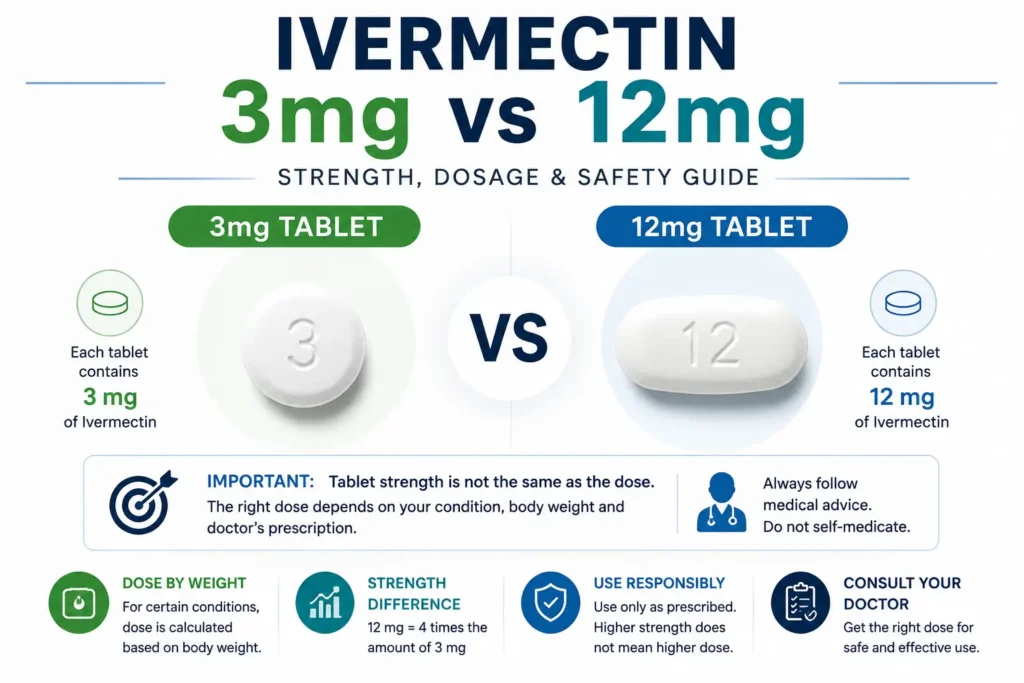
For example, a 12 mg tablet is one formulation available in some markets, but the appropriate strength and regimen depend on the medical indication and the patient’s circumstances.
If you are researching an ivermectin 12 mg tablet, check:
- Active ingredient and strength
- Manufacturer
- Product registration status where applicable
- Packaging
- Batch information
- Expiry date
- Storage instructions
- Applicable prescription requirements
- Destination-country regulations
For international customers, product availability and regulatory requirements can vary by country.
Frequently Asked Questions About Ivermectin
What is ivermectin?
Ivermectin is an antiparasitic medicine used to treat or control certain parasitic infections. Different ivermectin formulations can have different approved uses.
What is ivermectin used for?
Oral ivermectin is used for certain parasitic infections, including strongyloidiasis and onchocerciasis. Other ivermectin formulations may have different uses, including certain skin conditions and external parasites. Approved uses vary by country and product.
Is ivermectin an antibiotic?
No. Ivermectin is an antiparasitic medicine, not an antibiotic.
Does ivermectin treat parasites?
Ivermectin is used against certain parasites, particularly specific parasitic worms and, depending on the formulation and indication, certain external parasites.
Does ivermectin have side effects?
Yes. Ivermectin can cause side effects such as dizziness, nausea, vomiting, diarrhea and stomach discomfort. More serious reactions can also occur, particularly with excessive exposure or in certain clinical circumstances.
Is ivermectin safe for everyone?
No medicine is appropriate for everyone. Age, body weight, pregnancy, medical conditions, other medicines and the specific indication can affect whether ivermectin is appropriate.
Are ivermectin tablets and topical ivermectin the same?
No. Oral tablets and topical ivermectin products are different formulations and can have different approved uses.
Can veterinary ivermectin be used by humans?
No. Veterinary ivermectin products should not be used by humans because their formulations and concentrations can differ from medicines intended for people.
Ivermectin Product Information & Availability
If you are researching Ivermectin 12 mg tablets, Globalstar provides pharmaceutical product information and supports international healthcare sourcing enquiries, subject to applicable regulations.
You can review our available product information here:
Ivermectin 12 mg Tablet – Product Information
For questions regarding product specifications, availability, packaging or destination-country requirements:
Request Product Information / Availability
Please note: Product availability, prescription requirements, import requirements and permitted uses may vary by country. Customers should verify applicable local regulations and consult an appropriately qualified healthcare professional regarding medical use.
Important Medical Disclaimer
Disclaimer: This article is provided for general educational and informational purposes only. It is not intended to provide medical diagnosis, treatment or individualized medical advice. Ivermectin products differ by formulation, strength, manufacturer, indication and regulatory approval. Always follow the approved product information and advice of a qualified healthcare professional. Do not use veterinary medicines in humans. Product availability and regulatory requirements vary by country.
About the information in this article
This article has been prepared using information from established medical and public-health sources, including the U.S. FDA, MedlinePlus and the World Health Organization.
Last reviewed: August 2026