Table of Contents
Ivermectin for hookworms is a search query that can be confusing because ivermectin is a well-known antiparasitic medicine used for several parasitic infections.
However, ivermectin is not a standard first-line treatment for hookworm infection in current WHO guidance. For soil-transmitted helminth infections such as hookworm, WHO recommends medicines including albendazole and mebendazole.
Ivermectin has established uses for other parasitic infections, including intestinal strongyloidiasis and onchocerciasis, but that does not mean the same medicine is appropriate for every intestinal worm infection.
This guide explains what hookworms are, how infection occurs, symptoms, where ivermectin fits, standard treatment approaches, prevention and important safety considerations.
Medical disclaimer: This article is for general educational purposes only. It is not individualized medical advice and should not replace consultation with a qualified healthcare professional.
What Are Hookworms?
Hookworms are parasitic intestinal worms that belong to the soil-transmitted helminth group.
The main human hookworm species include:
- Ancylostoma duodenale
- Necator americanus
Adult hookworms live in the small intestine, where they attach to the intestinal lining and feed on blood.
Because of this blood loss, heavier infections can contribute to iron-deficiency anemia and nutritional problems, particularly in children and other vulnerable groups.
How Do People Get Hookworms?
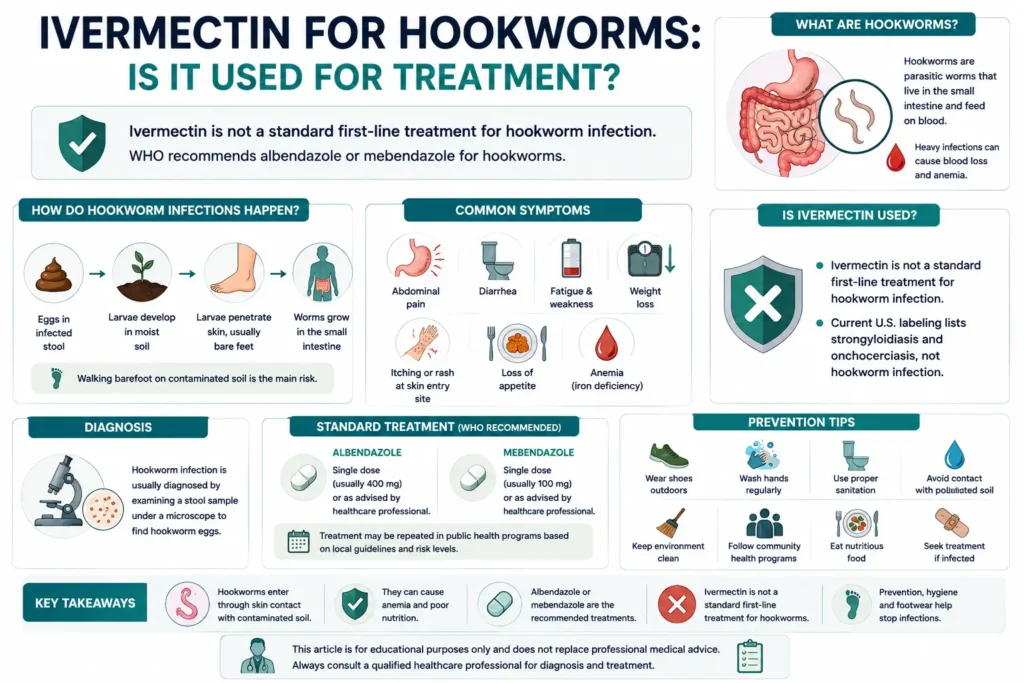
Hookworm infection is primarily acquired when infective larvae in contaminated soil penetrate the skin.
A typical transmission cycle is:
Infected person → Eggs released in stool → Larvae develop in soil → Larvae penetrate skin → Infection develops
Walking barefoot on contaminated soil is therefore an important risk factor.
This is different from some other intestinal parasites that are mainly acquired by swallowing contaminated food or water.
What Are the Symptoms of Hookworm Infection?
Some people with hookworm infection may have few symptoms.
When symptoms occur, they can include:
- Itching or rash where larvae enter the skin
- Abdominal discomfort
- Diarrhea
- Loss of appetite
- Fatigue
- Weakness
- Weight loss
- Anemia in heavier infections
The severity depends partly on the number of worms and the amount of blood loss.
Children with significant or repeated infections may be particularly vulnerable to the effects of chronic intestinal blood loss.
Can Hookworms Cause Anemia?
Yes.
Hookworms attach to the intestinal lining and consume blood.
Repeated or heavy infection can therefore contribute to iron-deficiency anemia, which may cause:
- Tiredness
- Weakness
- Pale skin
- Reduced concentration
- Shortness of breath during activity
This is one reason hookworm control is particularly important in communities where transmission occurs regularly.
How Are Hookworms Diagnosed?
Hookworm infection is commonly investigated through stool examination.
Laboratory testing can identify hookworm eggs in stool samples.
Depending on the clinical situation, healthcare professionals may also consider:
- Complete blood count
- Iron studies
- Hemoglobin levels
- Travel or residence history
- Exposure to contaminated soil
- Other causes of anemia
A diagnosis is important because abdominal symptoms and anemia can have many different causes.
Is Ivermectin Used for Hookworms?
Ivermectin is not a standard first-line treatment for hookworm infection.
This is the key point for readers searching for “ivermectin for hookworms.”
Current WHO guidance for soil-transmitted helminth infections recommends albendazole and mebendazole as the main medicines used for treatment and preventive chemotherapy.
By comparison, current U.S. ivermectin tablet labeling specifically lists:
- Intestinal strongyloidiasis
- Onchocerciasis
as its approved indications. Hookworm is not listed among those indications.
Therefore, people should not automatically choose ivermectin simply because it is an antiparasitic medicine.
Why Doesn’t One Antiparasitic Medicine Treat Every Worm?
Different parasites have different biology, life cycles and drug sensitivities.
For example:
| Infection | Parasite | Common treatment approach |
|---|---|---|
| Hookworm | Ancylostoma / Necator | Albendazole or mebendazole |
| Strongyloidiasis | Strongyloides stercoralis | Ivermectin |
| Onchocerciasis | Onchocerca volvulus | Ivermectin |
| Pinworm | Enterobius vermicularis | Mebendazole, pyrantel pamoate or albendazole |
The correct medicine therefore depends on the specific parasite being treated.
This distinction is important because using a medicine simply because it is described as an “antiparasitic” can lead to inappropriate treatment.
What Is the Standard Treatment for Hookworms?
WHO identifies albendazole and mebendazole as recommended medicines for soil-transmitted helminth infections.
Treatment may depend on:
- The patient’s age
- Severity of infection
- Local treatment guidelines
- Pregnancy status
- Other medical conditions
- Whether infection is individual or part of a community control program
Healthcare professionals should determine the appropriate medicine and regimen.
Albendazole and Mebendazole for Hookworms
Both albendazole and mebendazole belong to the benzimidazole group of antiparasitic medicines.
WHO recommends these medicines as important tools for controlling soil-transmitted helminth infections in endemic areas.
In public-health programs, treatment may be given periodically to populations at higher risk of soil-transmitted helminth infections.
This approach is different from treating an individual patient who has symptoms or a laboratory-confirmed infection.
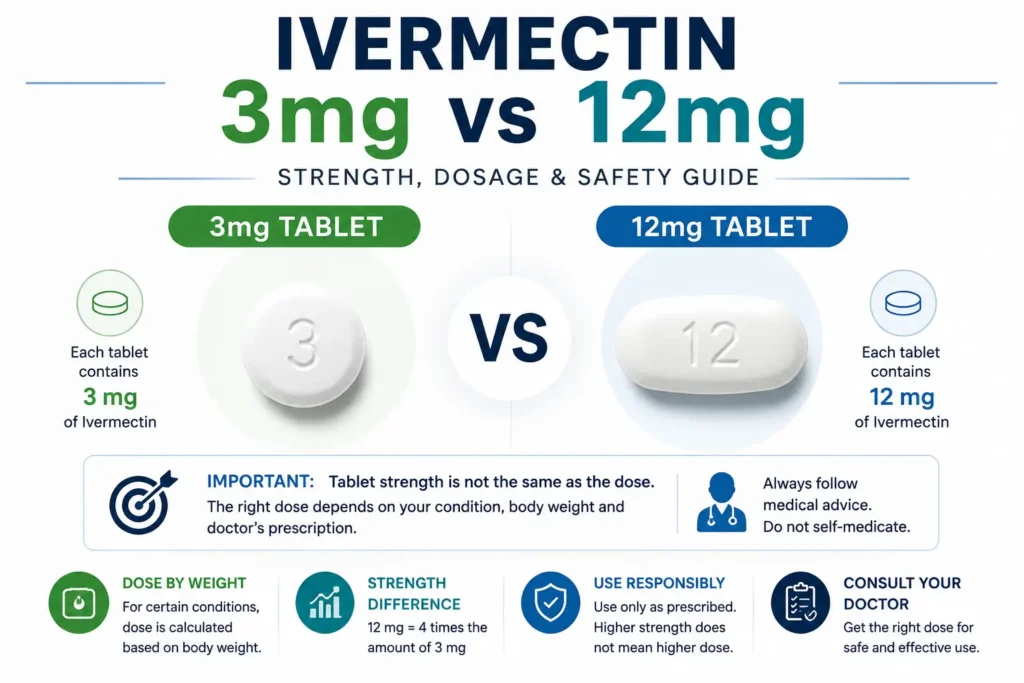
Does Ivermectin 12 mg Treat Hookworms?
This is another common question.
You should not assume that an ivermectin 12 mg tablet is appropriate for hookworm infection.
The strength printed on a tablet does not determine whether the medicine is suitable for a particular parasite.
Current U.S. ivermectin tablet labeling lists intestinal strongyloidiasis and onchocerciasis as indications.
Therefore, someone with suspected hookworm infection should not self-select ivermectin 12 mg simply because it is an antiparasitic tablet.
Ivermectin vs Hookworm Treatment
| Ivermectin | Standard hookworm treatment | |
|---|---|---|
| Used for some parasitic infections? | Yes | Yes |
| Standard first-line hookworm medicine? | No | Yes |
| WHO-recommended medicines for soil-transmitted helminths | Not the main recommendation for hookworm | Albendazole / Mebendazole |
| U.S. ivermectin tablet indications | Strongyloidiasis & onchocerciasis | Not a labeled hookworm indication |
| Should treatment be selected based on parasite? | Yes | Yes |
WHO’s current soil-transmitted helminth guidance supports albendazole and mebendazole as the principal medicines for control and treatment.
Can Hookworms Go Away on Their Own?
Hookworm infection should not simply be ignored.
Even when symptoms are mild, ongoing infection can contribute to continued intestinal blood loss.
Repeated exposure can also result in reinfection in areas where contaminated soil remains common.
Appropriate treatment and prevention measures are therefore important.
How Can Hookworm Infection Be Prevented?
Prevention focuses heavily on reducing contact with contaminated soil and improving sanitation.
Helpful measures include:
- 👟 Wear shoes outdoors
- 🧼 Wash hands regularly
- 🚽 Use proper sanitation facilities
- 🌱 Avoid direct contact with potentially contaminated soil
- 🧹 Maintain good environmental hygiene
- 👨👩👧 Follow local public-health recommendations in endemic areas
WHO identifies sanitation and hygiene improvements as important components of controlling soil-transmitted helminth infections.
Why Is Wearing Shoes Important?
Hookworm larvae can actively penetrate human skin.
Walking barefoot on contaminated soil therefore creates an opportunity for larvae to enter the body.
Wearing footwear can significantly reduce this route of exposure.
This is particularly relevant in areas where hookworm transmission is common.
Hookworms in Children
Children living in endemic areas can be particularly affected by soil-transmitted helminth infections.
Repeated or heavy infections can contribute to:
- Anemia
- Nutritional problems
- Weakness
- Reduced school performance
- Impaired development in severe cases
WHO recommends periodic preventive chemotherapy with albendazole or mebendazole for children in qualifying endemic areas.
The exact public-health schedule depends on local prevalence and national programs.
Hookworms During Pregnancy
Pregnancy requires individualized medical advice.
WHO’s public-health guidance includes women of reproductive age among groups that may benefit from treatment in endemic areas, including pregnant women in the second and third trimesters under appropriate programs.
However, an individual pregnant patient should not self-select an antiparasitic medicine.
Discuss suspected hookworm infection with a qualified healthcare professional.
Hookworm Infection and Anemia
One of the most important complications of significant hookworm infection is iron-deficiency anemia.
A healthcare professional may therefore evaluate:
- Hemoglobin
- Ferritin
- Iron levels
- Nutritional status
- Stool findings
Treating the underlying infection may be only one part of managing anemia. Iron replacement or nutritional intervention may also be required depending on the individual situation.
Can Hookworms Come Back After Treatment?
Yes.
Treatment can eliminate an existing infection, but it does not necessarily protect someone from future exposure.
If a person continues to walk barefoot on contaminated soil or lives in an area with inadequate sanitation, reinfection can occur.
That is why treatment programs often combine medication with sanitation, hygiene and prevention measures.
Can Ivermectin Be Used for Other Worm Infections?
Yes.
Ivermectin has established uses against certain parasites.
Current U.S. ivermectin tablet labeling includes:
Intestinal strongyloidiasis
Caused by Strongyloides stercoralis.
Onchocerciasis
Caused by Onchocerca volvulus.
However, those indications should not be generalized to hookworm infection.
This is why our Ivermectin content cluster covers individual parasitic infections separately.
Ivermectin and Strongyloidiasis: An Important Difference
Hookworm and strongyloidiasis can both be acquired through contact with contaminated soil, but they are caused by different parasites.
Hookworm:
Ancylostoma / Necator
Strongyloidiasis:
Strongyloides stercoralis
Ivermectin is an established treatment for intestinal strongyloidiasis, whereas hookworm treatment follows a different approach.
For more information, see our:
Ivermectin for Strongyloidiasis article.
When Should You See a Healthcare Professional?
Consider medical evaluation if you have:
- Persistent abdominal symptoms
- Unexplained anemia
- Persistent fatigue or weakness
- A history of living in or travelling to a hookworm-endemic area
- Regular barefoot exposure to soil
- Persistent skin symptoms after soil exposure
- Suspected intestinal worms
- Symptoms that continue despite treatment
Children, pregnant women and people with significant anemia should receive appropriate professional assessment.
Frequently Asked Questions About Ivermectin for Hookworms
Can ivermectin treat hookworms?
Ivermectin is not a standard first-line treatment for hookworm infection in current WHO guidance. Albendazole and mebendazole are among the recommended medicines for soil-transmitted helminth infections.
Is ivermectin approved for hookworms?
Current U.S. ivermectin tablet labeling lists intestinal strongyloidiasis and onchocerciasis, but not hookworm infection.
What is the usual treatment for hookworms?
WHO recommends medicines such as albendazole and mebendazole for soil-transmitted helminth infections, including hookworm.
Can ivermectin 12 mg be used for hookworms?
Do not self-treat hookworm infection with ivermectin 12 mg. Tablet strength does not determine whether the medicine is appropriate for the parasite.
How do people get hookworms?
Hookworm larvae in contaminated soil can penetrate human skin, particularly when people walk barefoot.
Can hookworms cause anemia?
Yes. Heavy or persistent hookworm infection can cause blood loss from the intestine and contribute to iron-deficiency anemia.
Can children get hookworms?
Yes. Children living in endemic areas can be affected by soil-transmitted helminth infections and may be included in preventive treatment programs.
Can hookworms come back after treatment?
Yes. Reinfection can occur when someone is exposed again to contaminated soil.
Is ivermectin used for other parasites?
Yes. Ivermectin is an established treatment for intestinal strongyloidiasis and onchocerciasis.
Why doesn’t ivermectin treat every type of worm?
Different parasites have different biological characteristics and drug sensitivities. Treatment should therefore be based on the specific infection.
Key Takeaways
If you’re searching for ivermectin for hookworms, remember:
- 🪱 Hookworms: Ancylostoma and Necator
- 🌱 Main transmission: Contaminated soil
- 👣 Important risk: Walking barefoot
- 🩸 Possible complication: Iron-deficiency anemia
- 💊 Standard treatment: Albendazole or mebendazole
- ⚠️ Ivermectin: Not a standard first-line hookworm treatment
- 🔬 Diagnosis: Often involves stool examination
- 👟 Prevention: Footwear + sanitation + hygiene
- 🔄 Reinfection: Possible after treatment
The most important lesson is simple:
An antiparasitic medicine should be matched to the parasite being treated.
Ivermectin has important and well-established uses, but those uses should not automatically be extended to every intestinal worm infection.
Related Ivermectin Guides
Continue exploring our Ivermectin educational series:
Ivermectin Uses — our overview of established and commonly discussed uses of ivermectin.
Ivermectin Dosage Guide — general information about ivermectin dosing and tablet strength.
Ivermectin Side Effects & Safety — information about adverse effects and safety considerations.
Ivermectin Drug Interactions — medicines and factors that may require additional caution.
Ivermectin for Strongyloidiasis — ivermectin’s established role in treating intestinal strongyloidiasis.
Ivermectin for Onchocerciasis — ivermectin and river blindness.
Ivermectin for Pinworms — why ivermectin is not a standard CDC-recommended pinworm treatment.
Medical Disclaimer
This article is provided for general educational and informational purposes only. It is not intended to diagnose, treat, cure or prevent any disease and should not replace advice from a qualified healthcare professional.
Ivermectin and other antiparasitic medicines differ in formulation, strength, indication, dosage and regulatory status. Always follow the official product information applicable to your country and consult a qualified healthcare professional for individual medical advice.
Authoritative References
WHO — Soil-Transmitted Helminth Infections
WHO: Soil-Transmitted Helminth Infections
WHO — Soil-Transmitted Helminthiases
WHO: Soil-Transmitted Helminthiases
DailyMed — Ivermectin Tablets
DailyMed: Ivermectin Tablets