Table of Contents
Pinworm infection is one of the most common intestinal parasitic infections, particularly among children and their households.
Because ivermectin is widely known as an antiparasitic medicine, people sometimes search for “ivermectin for pinworms” or “ivermectin for threadworms.”
However, there is an important distinction:
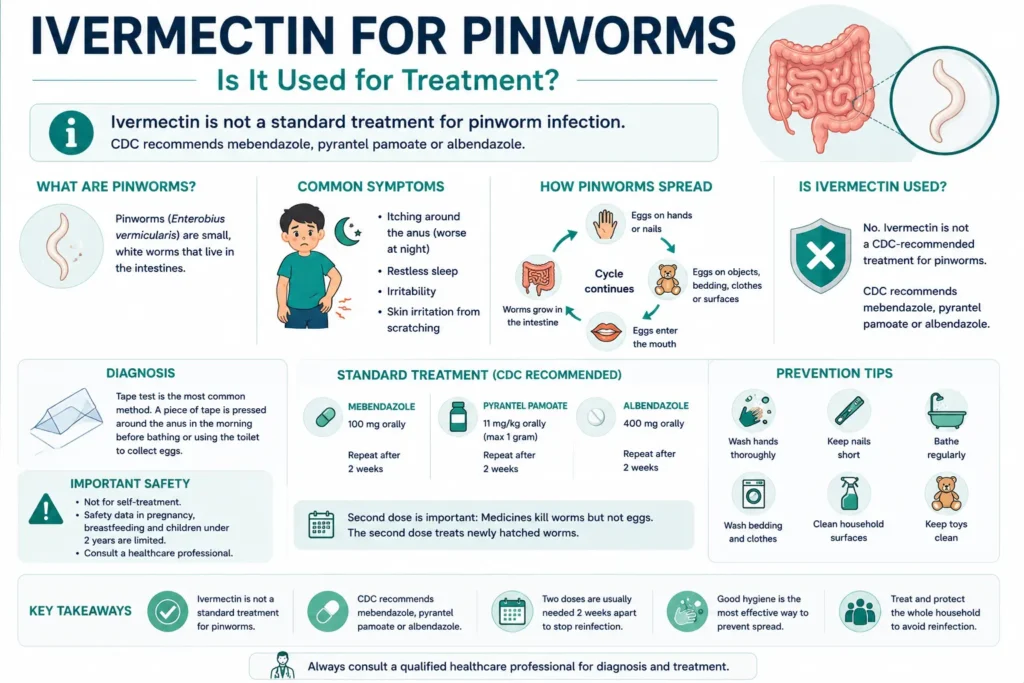
Ivermectin is not listed by the CDC as one of the standard medications used to treat pinworm infection. Current CDC guidance recommends mebendazole, pyrantel pamoate or albendazole instead.
This guide explains what pinworms are, how they spread, how they are diagnosed, where ivermectin fits, and what standard treatment options are available.
Medical disclaimer: This article is for general educational purposes only. It is not individualized medical advice and should not replace consultation with a qualified healthcare professional.
What Are Pinworms?
Pinworms are small, thin, white parasitic worms known scientifically as Enterobius vermicularis.
They live primarily in the intestinal tract.
Pinworm infection is particularly common among:
- Children
- School-aged groups
- People living in close households
- Families where reinfection occurs repeatedly
Most infections are not dangerous, but they can be extremely irritating and difficult to eliminate because the eggs spread easily between people.
What Are the Symptoms of Pinworms?
Many people with pinworms have no noticeable symptoms.
When symptoms occur, the most common is:
Persistent itching around the anus
The itching is often worse at night, when female pinworms come out around the anal area and deposit eggs.
Other possible symptoms include:
- Restless sleep
- Irritability
- Scratching around the anal area
- Skin irritation from repeated scratching
Occasionally, pinworms can migrate into the female genital tract and cause inflammation.
How Do Pinworms Spread?
Pinworms spread primarily through ingestion of microscopic eggs.
The typical cycle is:
Eggs around anal area → hands/fingernails → objects or food → mouth → intestinal infection
Eggs can contaminate:
- Bedding
- Clothing
- Towels
- Bathroom surfaces
- Toys
- Household objects
This is why pinworm infection can circulate within families.
How Are Pinworms Diagnosed?
The most common diagnostic method is the tape test.
A transparent adhesive tape or specially designed collection device is pressed against the skin around the anus, usually first thing in the morning before bathing or using the toilet.
The sample can then be examined for pinworm eggs.
CDC notes that routine stool testing is generally not the preferred diagnostic method because stool samples often do not contain enough eggs or worms to reliably detect the infection.
Is Ivermectin Used for Pinworms?
Not as a standard treatment.
This is the most important point of this article.
The current CDC clinical guidance for pinworm infection lists:
- Mebendazole
- Pyrantel pamoate
- Albendazole
Ivermectin is not included among CDC’s recommended pinworm treatment medications.
Therefore, someone who has confirmed or suspected pinworms should not automatically choose ivermectin simply because it is an antiparasitic medicine.
Different parasites respond differently to different medicines.
Why Doesn’t Ivermectin Automatically Work for Every Worm Infection?
Ivermectin has activity against several parasites, but that does not mean it is the appropriate treatment for every parasitic infection.
For example, current U.S. ivermectin tablet labeling specifically identifies:
- Intestinal strongyloidiasis
- Onchocerciasis
as approved indications.
Pinworm infection is a different parasitic disease caused by Enterobius vermicularis.
This is why the specific parasite matters when choosing treatment.
What Is the Standard Treatment for Pinworms?
CDC currently recommends three medications:
1. Mebendazole
100 mg orally, followed by a second dose two weeks later.
2. Pyrantel pamoate
11 mg/kg orally, up to a maximum of 1 gram, followed by a second dose two weeks later.
Pyrantel pamoate is available without prescription in the United States.
3. Albendazole
400 mg orally once, followed by a second dose two weeks later.
CDC explains that the second dose is important because these medicines kill worms but do not kill the eggs. Newly hatched worms can therefore cause reinfection if treatment is not repeated.
Treatment should always follow the applicable product label and healthcare guidance.
Why Is the Second Dose Important?
This is one of the most important aspects of pinworm treatment.
The medicines kill the worms, but they do not eliminate the eggs.
Therefore:
First treatment → existing worms are killed
Eggs remain → new worms hatch
Second treatment after 2 weeks → newly developed worms are treated
This two-dose approach is why simply taking one dose and stopping can result in continued infection.
What About the Whole Family?
Pinworms spread easily within households.
If one family member has an infection, other household members may also be exposed.
CDC recommends good hygiene practices for household members and close contacts, including appropriate hand hygiene, bathing and laundering of clothing and bedding.
Depending on the circumstances, healthcare professionals may recommend treatment strategies for household members.
How Can Pinworm Reinfection Be Prevented?
Medication is only one part of controlling pinworms.
Helpful measures include:
- Wash hands thoroughly with soap and water
- Keep fingernails short
- Avoid nail biting
- Avoid scratching around the anal area
- Bathe regularly
- Change underwear regularly
- Wash bedding and clothing appropriately
- Clean commonly touched household items
- Encourage children to wash their hands after using the bathroom
CDC identifies proper hand hygiene as the most effective prevention measure for reducing pinworm spread.
Does Ivermectin 12 mg Treat Pinworms?
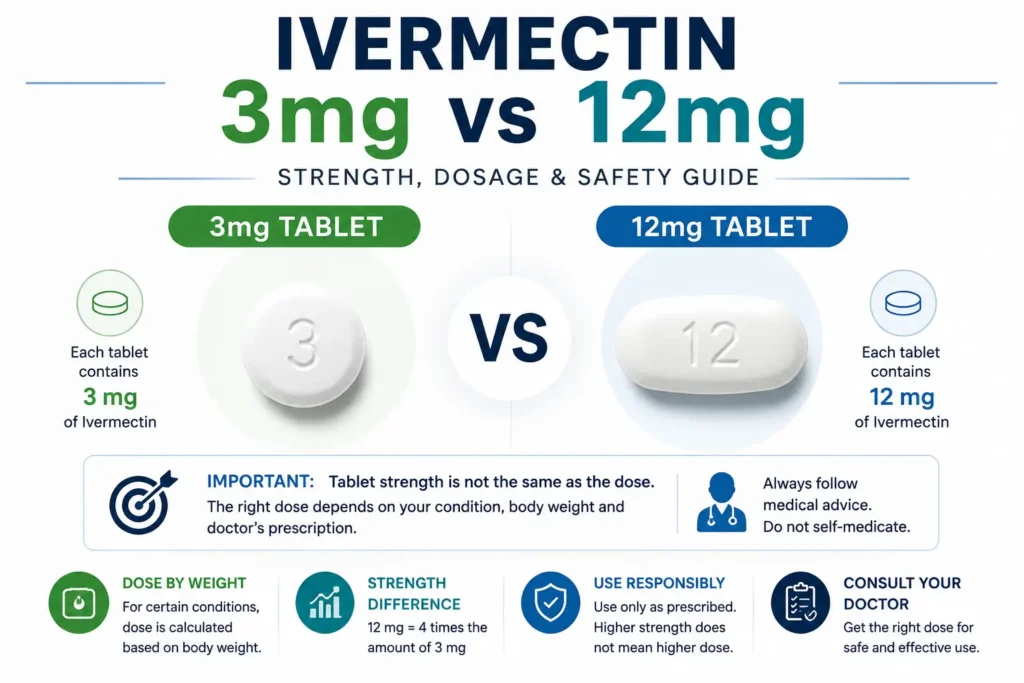
This is a particularly important question because people searching online may encounter ivermectin 12 mg tablets.
Do not assume that an ivermectin 12 mg tablet is an appropriate treatment for pinworms.
The tablet strength does not determine whether a medicine is appropriate for a particular parasite.
Current U.S. ivermectin labeling lists intestinal strongyloidiasis and onchocerciasis as indications; pinworm infection is not listed among those indications.
For this reason, people with suspected pinworms should use a treatment specifically recommended for pinworm infection rather than self-selecting ivermectin.
Ivermectin vs Standard Pinworm Medicines
| Ivermectin | Standard pinworm medicines | |
|---|---|---|
| Commonly used for pinworms? | No | Yes |
| CDC-listed pinworm treatment? | No | Yes |
| Examples | Ivermectin tablets | Mebendazole, pyrantel pamoate, albendazole |
| Second dose commonly recommended? | Not applicable for standard pinworm treatment | Yes, after 2 weeks |
| Main reason | Not a standard CDC-recommended pinworm treatment | Specifically used for pinworm infection |
CDC’s current guidance supports mebendazole, pyrantel pamoate and albendazole for pinworm treatment.
Can Children Get Pinworms?
Yes.
Pinworm infection is particularly common among children.
Children can easily spread eggs through:
- Hands
- Fingernails
- Toys
- Bedding
- Shared objects
However, medication selection for young children requires particular care.
CDC notes that the risks and benefits of pinworm medicines should be considered for patients under 2 years of age because safety information is more limited in this age group.
Parents should consult a healthcare professional rather than choosing an antiparasitic medicine based solely on internet information.
Pinworms During Pregnancy
Pregnancy requires additional consideration.
CDC notes that safety data for the medicines used to treat pinworm infection in pregnancy are limited. Treatment decisions should therefore consider the severity of infection and potential risks and benefits.
If you are pregnant and suspect pinworms, speak with your healthcare professional before taking any antiparasitic medicine.
Pinworms and Breastfeeding
Treatment during breastfeeding should also be discussed with a healthcare professional.
CDC notes that the available information differs between the medicines used for pinworm infection.
Do not substitute ivermectin for a recommended pinworm treatment without professional advice.
When Should You See a Healthcare Professional?
Seek professional advice if:
- You are unsure whether the symptoms are caused by pinworms
- A child under 2 years may need treatment
- Symptoms keep returning
- Several household members are affected
- There is significant skin irritation from scratching
- Symptoms persist after appropriate treatment
- You are pregnant or breastfeeding
- You are considering using ivermectin for pinworms
A recurring infection may require attention to household hygiene and reinfection, rather than simply taking additional medication.
Can Pinworms Go Away Without Treatment?
Some infections may eventually resolve, but pinworm eggs can continue the transmission cycle within households.
Because reinfection is common, appropriate treatment combined with hygiene measures is generally used to control the infection.
If symptoms persist or repeatedly return, medical advice is appropriate.
Frequently Asked Questions About Ivermectin for Pinworms
Can ivermectin treat pinworms?
Ivermectin is not a standard CDC-recommended treatment for pinworm infection. CDC currently recommends mebendazole, pyrantel pamoate or albendazole.
What is the best medicine for pinworms?
CDC lists mebendazole, pyrantel pamoate and albendazole as medications used to treat pinworm infection. The appropriate choice depends on factors such as age, availability and individual circumstances.
Can I take ivermectin 12 mg for pinworms?
You should not self-treat pinworms with ivermectin 12 mg tablets. Ivermectin’s U.S. labeled indications include intestinal strongyloidiasis and onchocerciasis, not pinworm infection.
Why are two doses used for pinworms?
The medicines kill worms but do not kill the eggs. The second dose, given two weeks after the first, helps treat worms that hatch after the initial treatment.
How do I know if I have pinworms?
Nighttime anal itching is a common symptom, but diagnosis is usually confirmed using a tape test rather than routine stool testing.
Can children get pinworms?
Yes. Pinworm infections are particularly common among children. Medication safety should be considered carefully in children, especially those under 2 years of age.
Can pinworms spread through bedding?
Yes. Pinworm eggs can contaminate bedding, clothing and household surfaces, which is why laundering and hand hygiene are important parts of controlling infection.
Can pinworms come back after treatment?
Yes. Reinfection is common because the eggs can remain in the environment and spread between household members.
Is ivermectin used for other parasitic infections?
Yes. Ivermectin is an established treatment for conditions including intestinal strongyloidiasis and onchocerciasis, but its use depends on the specific parasite and diagnosis.
Key Takeaways
If you’re searching for ivermectin for pinworms, the most important answer is: ivermectin is not a standard CDC-recommended treatment for pinworm infection.
Remember:
- 🪱 Pinworm: Enterobius vermicularis
- 🌙 Common symptom: Nighttime anal itching
- 🔬 Common test: Tape test
- 💊 CDC-listed medicines: Mebendazole, pyrantel pamoate and albendazole
- 🔄 Second dose: Usually 2 weeks later
- 🧼 Prevention: Strict hand hygiene and household hygiene
- 👨👩👧 Households: Reinfection can occur easily
- ⚠️ Ivermectin: Not a standard pinworm treatment
Choosing an antiparasitic medicine based on the specific parasite, rather than simply choosing a medicine because it is broadly described as an antiparasitic, is important.
Related Ivermectin Guides
For readers researching ivermectin and different parasitic infections:
Ivermectin Uses: Medical Uses & Indications
Ivermectin Side Effects & Safety Guide
Ivermectin Drug Interactions Guide
Ivermectin for Strongyloidiasis
Medical Disclaimer
This article is provided for general educational and informational purposes only. It is not intended to diagnose, treat, cure or prevent any disease and should not replace advice from a qualified healthcare professional.
Ivermectin products differ in formulation, strength, indication, dosage and regulatory status. Always follow the official product information applicable to your country and consult a qualified healthcare professional for individual medical advice.
Authoritative References
CDC — Clinical Overview of Pinworm Infection
CDC: Clinical Overview of Pinworm Infection
DailyMed — Ivermectin Tablets
DailyMed: Ivermectin Tablets